Context
India has a significant graduate unemployment problem. One report puts unemployment among young graduates in the labour force at 22.2% nationally, with states differing substantially (source). OnboardAI exists to close part of that gap by building job-ready skills among graduates in peri-urban areas.
To do that well, we needed to answer two questions: what jobs are actually available to graduates, and which skills are they missing?
Finding the skills gap
I built a web scraper with Jupyter and Selenium and collected over 260K job roles. From that set I analysed about 50K listings to see which skills employers expected most from graduates, and which were most in demand.
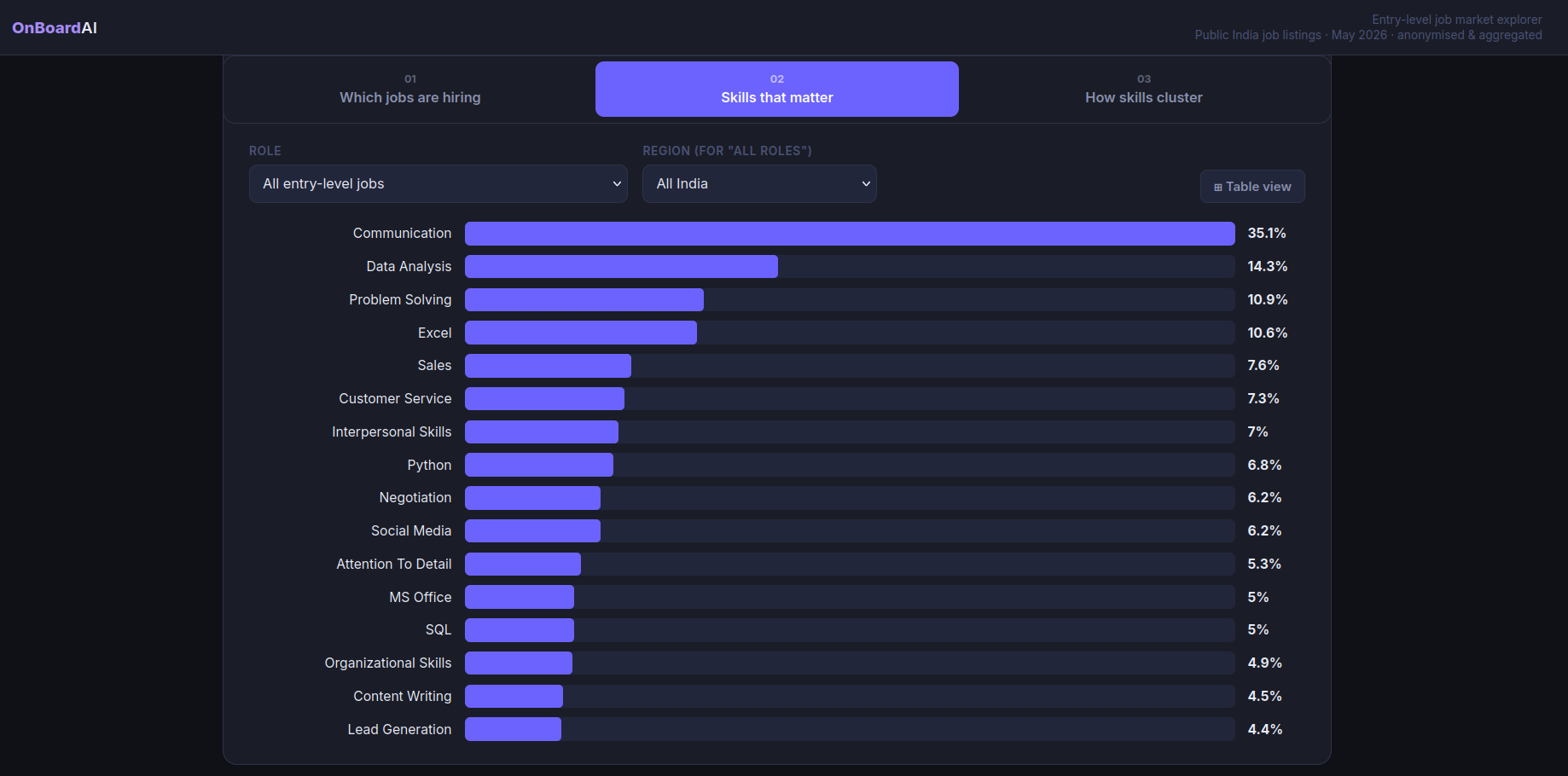
This analysis became the input for how we designed the curriculum.
Three cohorts, three curricula
Each cohort tested a different way of turning that data into a learning experience.
- Cohort 1 — role-focused profiles. Skills built around very specific roles chosen from learners' interests, such as cybersecurity analyst or database management.
- Cohort 2 — market-driven curriculum. Task-based learning focused on the most in-demand skills identified by the job-listings analysis.
- Cohort 3 — project-based pathway. Learners chose a new or existing product and made a feature change to it, learning the most in-demand skills along the way: communication, marketing collateral, competitor analysis, working with relevant datasets, pitching, and directing AI to build. The skills were applied directly to developing their own product or feature.
The final version was our most successful, with the highest completion of the three.
Catching drop-off early
Completion was the metric that mattered, so I designed an intervention tool in n8n. It looks at daily usage to spot where learner participation is dropping off, and reports straight to my Telegram. That let me monitor cohorts and step in with individual learners at the moment it was needed.
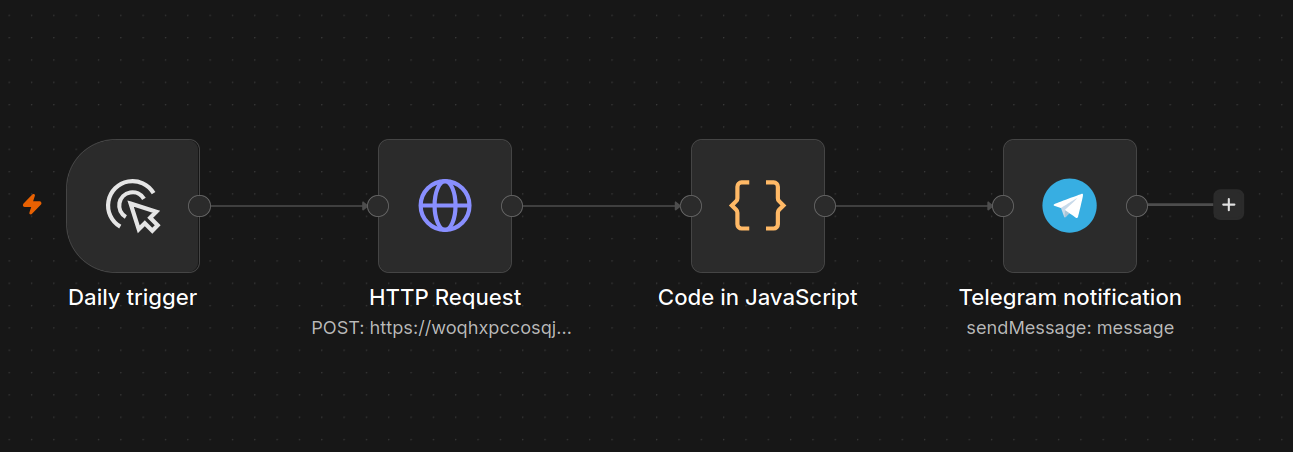
Result: Completion rose from 30% to 56% across the three cohorts.
Outcome
- Rebuilt the product across three cohorts, lifting completion from 30% to 56%: from role-based upskilling, to a market-driven model built on a national job-listings pipeline, to a project-based model where learners directed AI tools through research, data analysis, prototyping, and pitching.
- Built an automated engagement-monitoring workflow that flagged at-risk learners in real time. The resulting outreach re-engaged learners who made up at least a third of all completions.